
English| EUR
Suggested for you
More currencies
Choose a language
Angra dos Reis sits on a tropical coast where the Serra do Mar squeezes rain out of the sea air, so the forecast here behaves differently from Rio's, ninety kilometres east. This angra dos reis weather guide sets out what each season delivers, how the bay reads on a grey morning, and which conditions actually cancel a schooner.
Quick answer
Angra dos Reis has a humid tropical climate, warm year-round, with daytime highs typically in the high twenties Celsius and a wetter stretch from December to March. The town itself is a public city with no entrance fee, open 00:00–23:59 every day, so weather — not access — decides your day. Rain often falls in short afternoon bursts rather than all-day drizzle.
Angra dos Reis records more annual rainfall than almost anywhere else on Brazil's southeast coast, and the reason is geographic rather than seasonal: the Serra do Mar escarpment rises steeply behind the shoreline, forcing moist Atlantic air upward until it condenses. That single fact explains most of what visitors experience here. The clima em Angra dos Reis is not simply hot — it is humid, mountainous and locally variable, which is why one island can sit under cloud while another, twenty minutes by boat, stays bright. The practical unit of measurement in this bay is not the daily forecast but the sea state. Angra dos Reis weather matters chiefly through wind, swell and visibility, because the region's draw is water-based: the 365 islands of the Baía da Ilha Grande, the green shallows at Lagoa Azul, the sheltered anchorages around Ilha Grande and Ilhas Botinas. Schooner operators watch the frente fria — the cold fronts that sweep up from the south — more closely than they watch rainfall totals. A front can flatten a forecast for two or three days, push swell into the outer channels, and leave the inner bay near Praia do Anil perfectly calm. Summer brings the heaviest downpours but also the warmest sea, comfortable for snorkelling without a wetsuit; the drier months from May to September trade humidity for clearer horizons and cooler evenings in the historic centre. Readers should treat this Angra dos Reis weather picture as a probability, not a promise. Local skippers rarely cancel for rain alone. They cancel for wind, and they reroute constantly, swapping an exposed outer island for a protected cove without announcing it in advance. That flexibility is the point: a grey morning in Angra frequently clears by midday, and the mountain cloud that ruins a photograph of Pico do Papagaio often burns off before the second swimming stop. The useful response is to book flexibly, pack for both sun and a soaking, and accept that the bay rewards patience. Anyone planning a day trip out of Rio should check conditions the evening before rather than a week ahead, when tropical forecasts for this stretch of coast carry little reliability.
“Local skippers rarely cancel for rain alone — they cancel for wind, and they reroute constantly.”
Angra dos Reis experiences a tropical climate with a distinct rainy season, making the months of April, May, September, and October the most favorable for clear skies and boat-based excursions. During these periods, rainfall decreases while temperatures remain comfortable for maritime activities.
Hot, humid, frequent heavy rain
Expect temperatures reaching 30°C and sudden tropical downpours.
Pleasant temperatures, lower rainfall
Clearer skies and mild weather create ideal conditions for island exploration.
Cooler, drier air, 20°C–24°C
Drier conditions persist, though water temperatures are cooler than in summer.
Increasing warmth, stable conditions
Stable weather patterns return before the onset of the summer rainy season.
Verdict: The best time to visit is during the shoulder months of April, May, September, or October to balance favorable weather with manageable crowd levels.
Angra dos Reis is accessible 24 hours a day, though visitors should coordinate arrivals with optimal weather and maritime conditions. The recommended arrival window is 09:00–16:00 to ensure sufficient daylight for boat trips and coastal activities.
Angra dos Reis is located approximately 155 kilometers south of Rio de Janeiro. Reaching the city typically involves traveling via the BR-101 highway or coordinated bus services, though maritime conditions often dictate the final leg of the journey.
Costa Verde bus from Rodoviária do Rio to Angra dos Reis
BR-101 (Rio-Santos Highway) from Rio de Janeiro
Local transfer services from mainland ports to islands
Plan your arrival within the 09:00–16:00 window to ensure optimal daylight for scheduled boat connections and to avoid travel delays caused by heavy rain or fog on the BR-101.
Angra dos Reis is a public city with no admission fee required to enter. Visitors should anticipate costs related to optional services, such as boat tours, which are primarily influenced by local weather conditions.
Verdict: The base entrance fee is 0 BRL, though travelers typically incur costs for boat tour services that fluctuate based on favorable weather.
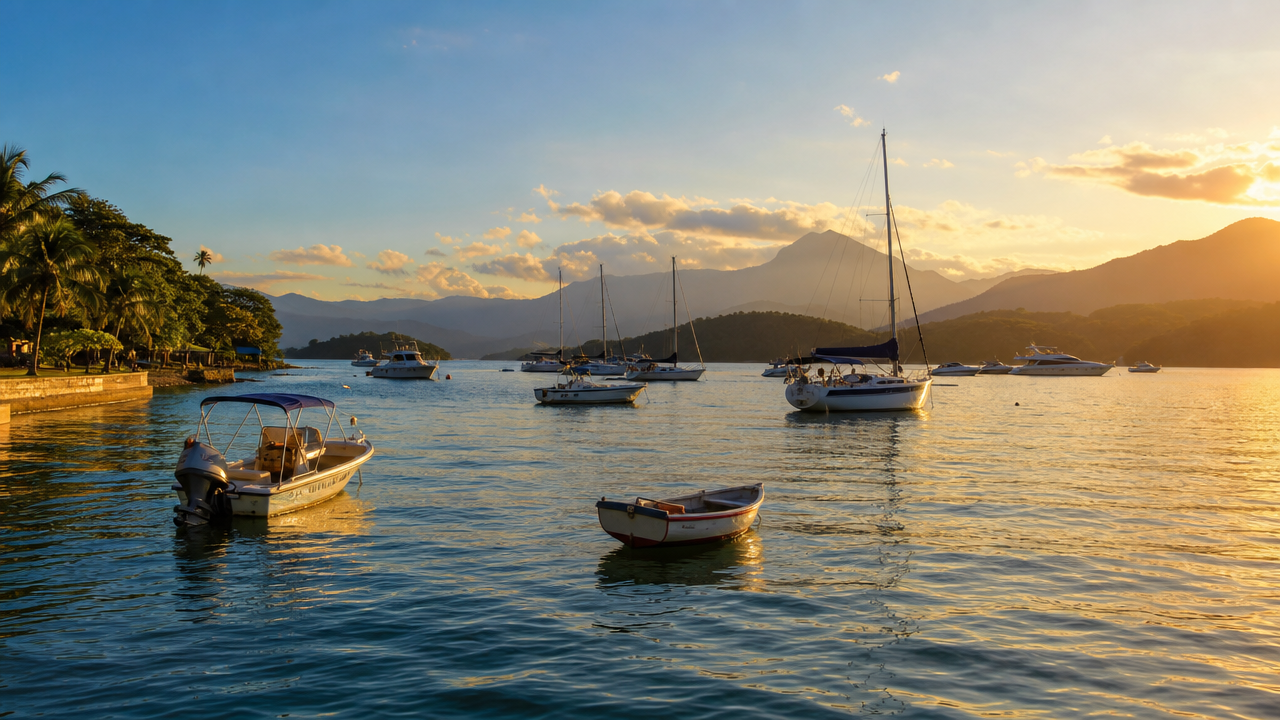
Angra dos Reis sits in a humid coastal band where sun, sudden rain and salt spray all land in the same afternoon, so pack for all three.
Everything you need to know about angra dos reis weather
The best time to enjoy favorable angra dos reis weather is during the warmer months, typically from December to March. Visitors often find that these months offer the most consistent sunshine for island hopping.
While boat tours operate year-round, severe angra dos reis weather can occasionally lead to cancellations for safety reasons. It is advisable to check local conditions with your tour operator before heading to the port.
Packing light, breathable clothing and high-quality sun protection is essential for the coastal climate of Angra dos Reis. Bringing a light raincoat is also wise, as tropical showers can occur suddenly despite the general angra dos reis weather outlook.
Tropical regions like this one can experience sudden shifts in conditions, meaning forecasts are not always perfectly accurate. Planning your visit with flexibility allows you to make the most of the diverse shoreline and emerald waters.
If rain occurs, many visitors choose to explore the historic city center or visit local indoor attractions instead of heading out to sea. These rainier moments are a natural part of the tropical landscape and rarely last all day.
There is no entrance fee to access the region as it is a public city. You only need to plan for the costs of boat rentals or private tours.
The best arrival window is between 09:00 and 16:00 to maximize daylight for your activities. Arriving within this timeframe ensures you have sufficient time to enjoy the beaches and clear visibility for navigation.